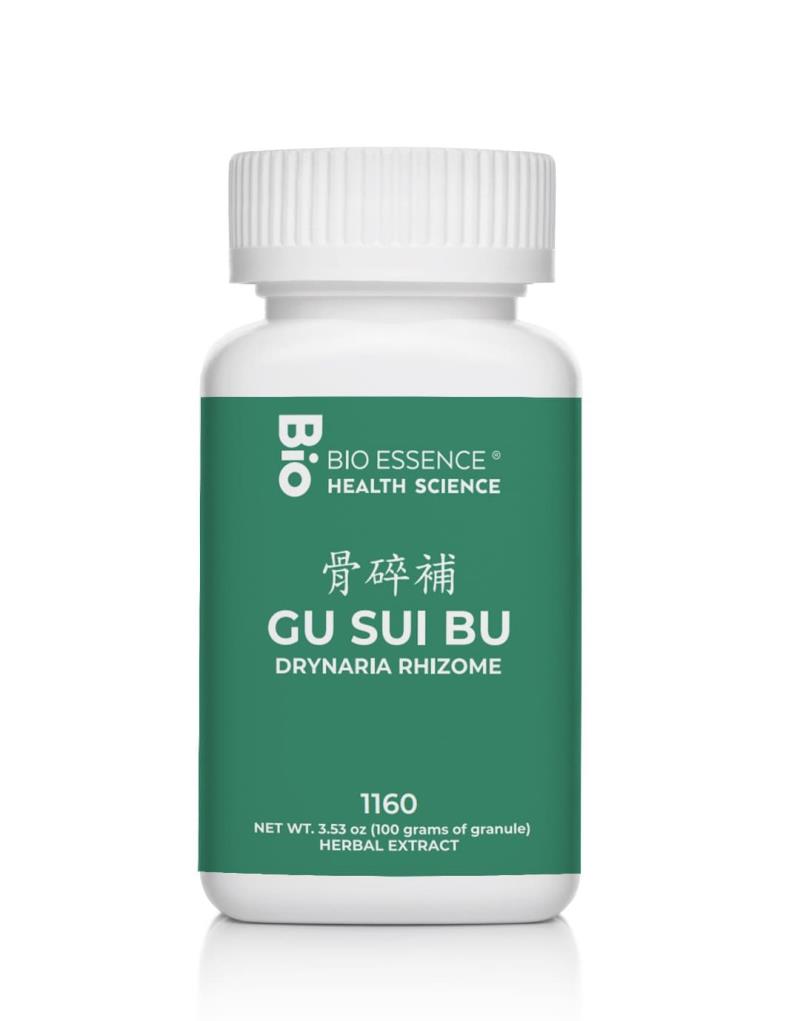
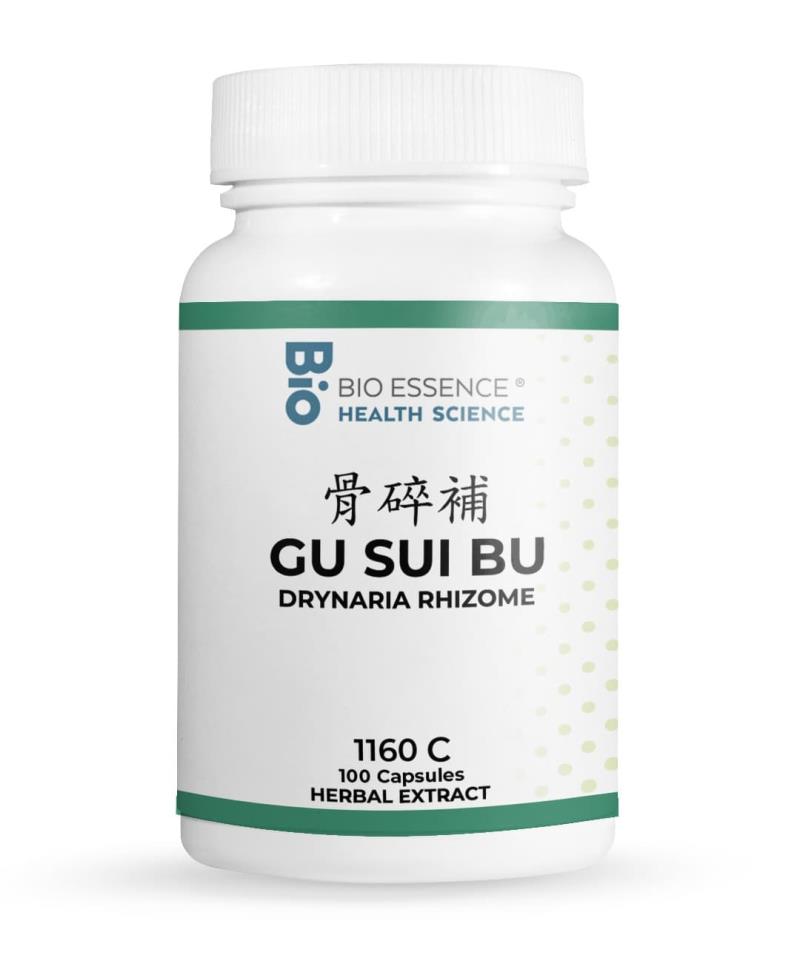
The dry root tuber of perennial overgrowth fern plant Drynaria fortune. This herb enters liver and kidney meridians and can activate blood, dissolve stasis, reunion of fractured tendons and bones, resolve swelling and alleviate pain. It is indicated for traumatic injuries, injuries, congestion, swelling and pain. This herb enters kidney and treat bone so named after its major indication of soft tissue injury and broken bone. It also has the actions of tonifying kidney and strengthening bone besides activating blood, curing trauma and alleviating pain. It is the commonly used herb especially for the syndrome of soft tissue injury and bone fracture in traumatology because it moves and dissolves qi and blood stagnation due to traumatic injuries and stops bleeding due to incised wound and broken collaterals.
BE1160/1160C
Brand
Long Description
Name: Drynaria Rhizoma (骨碎補)
Pinyin: Gu Sui Bu
Pharm. Name: Drynari, Rhizoma
Properties:
Taste
Characteristics
Organs
Dosage
Bitter
Activate blood and cure trauma, tonify kidney
Heart Liver, Kidney
6-21g, 30g (Streng then kidneys)
Description:
The dry root tuber of perennial overgrowth fern plant Drynaria fortune. This herb enters liver and kidney meridians and can activate blood, dissolve stasis, reunion of fractured tendons and bones, resolve swelling and alleviate pain. It is indicated for traumatic injuries, injuries, congestion, swelling and pain. This herb enters kidney and treat bone so named after its major indication of soft tissue injury and broken bone. It also has the actions of tonifying kidney and strengthening bone besides activating blood, curing trauma and alleviating pain. It is the commonly used herb especially for the syndrome of soft tissue injury and bone fracture in traumatology because it moves and dissolves qi and blood stagnation due to traumatic injuries and stops bleeding due to incised wound and broken collaterals.
Bio Essence Health Science
Unit Size
Long Description
Name: Drynaria Rhizoma (骨碎補)
Pinyin: Gu Sui Bu
Pharm. Name: Drynari, Rhizoma
Properties:
Taste
Characteristics
Organs
Dosage
Bitter
Activate blood and cure trauma, tonify kidney
Heart Liver, Kidney
6-21g, 30g (Streng then kidneys)
Description:
The dry root tuber of perennial overgrowth fern plant Drynaria fortune. This herb enters liver and kidney meridians and can activate blood, dissolve stasis, reunion of fractured tendons and bones, resolve swelling and alleviate pain. It is indicated for traumatic injuries, injuries, congestion, swelling and pain. This herb enters kidney and treat bone so named after its major indication of soft tissue injury and broken bone. It also has the actions of tonifying kidney and strengthening bone besides activating blood, curing trauma and alleviating pain. It is the commonly used herb especially for the syndrome of soft tissue injury and bone fracture in traumatology because it moves and dissolves qi and blood stagnation due to traumatic injuries and stops bleeding due to incised wound and broken collaterals.
100 Gram bottle / 100 Caps bottle
Extract Ratio
Long Description
Name: Drynaria Rhizoma (骨碎補)
Pinyin: Gu Sui Bu
Pharm. Name: Drynari, Rhizoma
Properties:
Taste
Characteristics
Organs
Dosage
Bitter
Activate blood and cure trauma, tonify kidney
Heart Liver, Kidney
6-21g, 30g (Streng then kidneys)
Description:
The dry root tuber of perennial overgrowth fern plant Drynaria fortune. This herb enters liver and kidney meridians and can activate blood, dissolve stasis, reunion of fractured tendons and bones, resolve swelling and alleviate pain. It is indicated for traumatic injuries, injuries, congestion, swelling and pain. This herb enters kidney and treat bone so named after its major indication of soft tissue injury and broken bone. It also has the actions of tonifying kidney and strengthening bone besides activating blood, curing trauma and alleviating pain. It is the commonly used herb especially for the syndrome of soft tissue injury and bone fracture in traumatology because it moves and dissolves qi and blood stagnation due to traumatic injuries and stops bleeding due to incised wound and broken collaterals.
5:1
Taste
Long Description
Name: Drynaria Rhizoma (骨碎補)
Pinyin: Gu Sui Bu
Pharm. Name: Drynari, Rhizoma
Properties:
Taste
Characteristics
Organs
Dosage
Bitter
Activate blood and cure trauma, tonify kidney
Heart Liver, Kidney
6-21g, 30g (Streng then kidneys)
Description:
The dry root tuber of perennial overgrowth fern plant Drynaria fortune. This herb enters liver and kidney meridians and can activate blood, dissolve stasis, reunion of fractured tendons and bones, resolve swelling and alleviate pain. It is indicated for traumatic injuries, injuries, congestion, swelling and pain. This herb enters kidney and treat bone so named after its major indication of soft tissue injury and broken bone. It also has the actions of tonifying kidney and strengthening bone besides activating blood, curing trauma and alleviating pain. It is the commonly used herb especially for the syndrome of soft tissue injury and bone fracture in traumatology because it moves and dissolves qi and blood stagnation due to traumatic injuries and stops bleeding due to incised wound and broken collaterals.
Sweet
Acrid
Properties
Long Description
Name: Drynaria Rhizoma (骨碎補)
Pinyin: Gu Sui Bu
Pharm. Name: Drynari, Rhizoma
Properties:
Taste
Characteristics
Organs
Dosage
Bitter
Activate blood and cure trauma, tonify kidney
Heart Liver, Kidney
6-21g, 30g (Streng then kidneys)
Description:
The dry root tuber of perennial overgrowth fern plant Drynaria fortune. This herb enters liver and kidney meridians and can activate blood, dissolve stasis, reunion of fractured tendons and bones, resolve swelling and alleviate pain. It is indicated for traumatic injuries, injuries, congestion, swelling and pain. This herb enters kidney and treat bone so named after its major indication of soft tissue injury and broken bone. It also has the actions of tonifying kidney and strengthening bone besides activating blood, curing trauma and alleviating pain. It is the commonly used herb especially for the syndrome of soft tissue injury and bone fracture in traumatology because it moves and dissolves qi and blood stagnation due to traumatic injuries and stops bleeding due to incised wound and broken collaterals.
Neutral
適用於
Long Description
Name: Drynaria Rhizoma (骨碎補)
Pinyin: Gu Sui Bu
Pharm. Name: Drynari, Rhizoma
Properties:
Taste
Characteristics
Organs
Dosage
Bitter
Activate blood and cure trauma, tonify kidney
Heart Liver, Kidney
6-21g, 30g (Streng then kidneys)
Description:
The dry root tuber of perennial overgrowth fern plant Drynaria fortune. This herb enters liver and kidney meridians and can activate blood, dissolve stasis, reunion of fractured tendons and bones, resolve swelling and alleviate pain. It is indicated for traumatic injuries, injuries, congestion, swelling and pain. This herb enters kidney and treat bone so named after its major indication of soft tissue injury and broken bone. It also has the actions of tonifying kidney and strengthening bone besides activating blood, curing trauma and alleviating pain. It is the commonly used herb especially for the syndrome of soft tissue injury and bone fracture in traumatology because it moves and dissolves qi and blood stagnation due to traumatic injuries and stops bleeding due to incised wound and broken collaterals.
Clear liver heat
Disperse wind-heat
Improve vision
Channels Entered
Long Description
Name: Drynaria Rhizoma (骨碎補)
Pinyin: Gu Sui Bu
Pharm. Name: Drynari, Rhizoma
Properties:
Taste
Characteristics
Organs
Dosage
Bitter
Activate blood and cure trauma, tonify kidney
Heart Liver, Kidney
6-21g, 30g (Streng then kidneys)
Description:
The dry root tuber of perennial overgrowth fern plant Drynaria fortune. This herb enters liver and kidney meridians and can activate blood, dissolve stasis, reunion of fractured tendons and bones, resolve swelling and alleviate pain. It is indicated for traumatic injuries, injuries, congestion, swelling and pain. This herb enters kidney and treat bone so named after its major indication of soft tissue injury and broken bone. It also has the actions of tonifying kidney and strengthening bone besides activating blood, curing trauma and alleviating pain. It is the commonly used herb especially for the syndrome of soft tissue injury and bone fracture in traumatology because it moves and dissolves qi and blood stagnation due to traumatic injuries and stops bleeding due to incised wound and broken collaterals.
Liver
Stomach
Instructions
Long Description
Name: Drynaria Rhizoma (骨碎補)
Pinyin: Gu Sui Bu
Pharm. Name: Drynari, Rhizoma
Properties:
Taste
Characteristics
Organs
Dosage
Bitter
Activate blood and cure trauma, tonify kidney
Heart Liver, Kidney
6-21g, 30g (Streng then kidneys)
Description:
The dry root tuber of perennial overgrowth fern plant Drynaria fortune. This herb enters liver and kidney meridians and can activate blood, dissolve stasis, reunion of fractured tendons and bones, resolve swelling and alleviate pain. It is indicated for traumatic injuries, injuries, congestion, swelling and pain. This herb enters kidney and treat bone so named after its major indication of soft tissue injury and broken bone. It also has the actions of tonifying kidney and strengthening bone besides activating blood, curing trauma and alleviating pain. It is the commonly used herb especially for the syndrome of soft tissue injury and bone fracture in traumatology because it moves and dissolves qi and blood stagnation due to traumatic injuries and stops bleeding due to incised wound and broken collaterals.
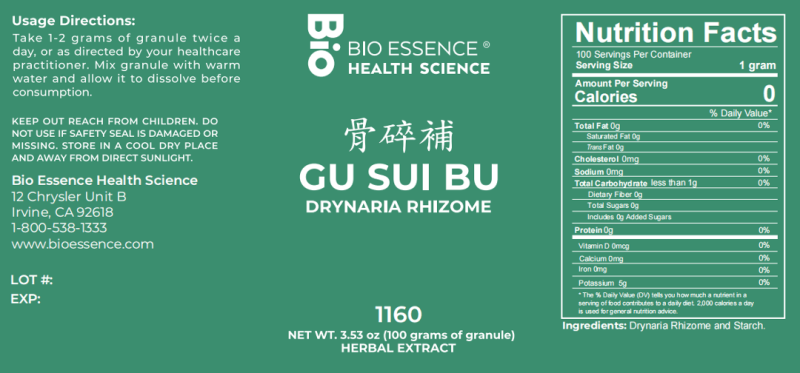
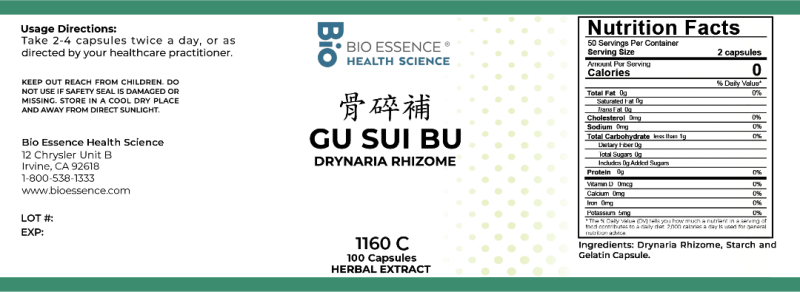
Take 1-2 grams of granules or 2-4 capsules twice a day, or as directed by your healthcare practitioner. Mix granules with warm water and allow it to dissolve before consumption.
Precautions
Long Description
Name: Drynaria Rhizoma (骨碎補)
Pinyin: Gu Sui Bu
Pharm. Name: Drynari, Rhizoma
Properties:
Taste
Characteristics
Organs
Dosage
Bitter
Activate blood and cure trauma, tonify kidney
Heart Liver, Kidney
6-21g, 30g (Streng then kidneys)
Description:
The dry root tuber of perennial overgrowth fern plant Drynaria fortune. This herb enters liver and kidney meridians and can activate blood, dissolve stasis, reunion of fractured tendons and bones, resolve swelling and alleviate pain. It is indicated for traumatic injuries, injuries, congestion, swelling and pain. This herb enters kidney and treat bone so named after its major indication of soft tissue injury and broken bone. It also has the actions of tonifying kidney and strengthening bone besides activating blood, curing trauma and alleviating pain. It is the commonly used herb especially for the syndrome of soft tissue injury and bone fracture in traumatology because it moves and dissolves qi and blood stagnation due to traumatic injuries and stops bleeding due to incised wound and broken collaterals.
Contraindicated in those with yin deficiency, or in those without blood stasis.
We use cookies to improve user experience and analyze website traffic. By clicking "Accept", you agree to our website's cookie use as described in our Cookie Policy .